Jane Austen sure knew how to write a great story, as evidenced in the multiple modern-day film adaptations of her work. So I've decided to do a bit of a comparison to see who's done it best, going in chronological order.
Clueless (1995)
This was a really smart adaptation of Emma, transported into LA's superficial Beverly Hills high school scene. Didn't we all fall in love with Alicia Silverstone's irresistably clueless Cher and Paul Rudd as her dorky ex-step-brother?
They got the ingredients just right because although Emma is a privileged meddler who thinks a little too well of herself, at heart, she's a well-meaning and kind person who gets things wrong. It's a nice bit of narcissism for the reader/viewer to be more astute and insightful than the girl who knows everything but her own heart, and it's nice to see her humbled a little.
Amy Heckerling did a great job of injecting absurdist humour, poking fun of modern teenagers (like the bumful of underwear showing under low-slung jeans) while also making them endearing and even quite delightful to watch.
Just as it's easy for people to overlook Austen as a bit of fluff about women's obsession with marriage and climbing the social ladder, it's easy to write off rich kids as spoilt brats. But instead, with both Emma and Clueless, we get a reminder that people are people no matter what social culture you belong to, and that we're really not that different at heart.
Bridget Jones's Diary (2001)
A simply superb adaptation of Pride and Prejudice with Elizabeth Bennett as a modern, slightly chubby Londoner in the form of Bridget Jones, played to perfection by Renee Zellwegger. While it isn't strictly true to Elizabeth's character (she's witty and intelligent whereas Bridget is kind-hearted and perceptive but very much accident and embarrassment prone), she's just as endearing.
What they do really well in Bridget Jones is bring the fiery love/hate sexual tension between Elizabeth and Darcy to life while making it really funny rather than dramatic and intense. The foibles of the modern independent woman are humorously portrayed and the common theme of people just wanting love, no matter what era you live in, plays out nicely in what is essentially a love story.
Helen Fielding's humour translates well into film, and the characters are modernised scrupulously well. Even Daniel (the wicked Wickham) is someone you love to hate rather than just hate.
This is my favourite adaptation so far.
Bride and Prejudice (2004)
This is Pride and Prejudice with all the colour, verve, drama and music of Bollywood. Instead of Elizabeth we have gorgeous Aishwarya Rai as Lalita, in Darcy's place we have wealthy American hotelier Will, and instead of starched British manners we get people breaking into song and dance, like the memorable 'no wife no life'.
Gurinda Chadha does a great job bringing this story to life, focusing on the common themes of Austen's England and modern day India - like Mrs Bakshi's obsession to marry off her daughters (if only Mrs Bennett had had the resources of IndianMatchmaker.com) and the idea of arranged marriage versus love marriage.
There are a few times when it slips into a little bit of cringe, like the love scenes of Lalita and Will looking into the sunset, playing in the fountain and walking on the beach, which perhaps were deliberately OTT to poke gentle fun at Bollywood films, but overall it's a good girlie film and quite true to the original novel.
From Prada to Nada (2011)
I watched this a little reluctantly as I had a feeling I might regret it, but as an adaptation of Sense and Sensibility I felt a certain responsibility to watch and report. It's a Latina version that's tried to do a cross between a cultural Bride and Prejudice type thing on an obviously smaller budget, and a playful Clueless thing without the witty script.
The Dominguez sisters fall from great heights when their wealthy father passes away and they're relegated to the very modest East LA home of their very Mexican Aunt - a culture they've had almost nothing to do with and in fact seem quite ashamed of at first.
Almost from the first scene the characters are more like caricatures and the level of predictability is breathtaking. But it's not all bad. I liked that Nora (the ever-responsible Elinor) is re-envisioned as a law student fighting for the underprivileged, but I wasn't so crash hot about the stereotyped Mexican cleaners whose case she takes up and, through the process, falls in love with her boss Edward Ferris. Colonel Brandon is reinvented as a thug-looking tattooed handyman/artist with a heart of gold (a very surprising turn by an unrecognisable Wilmer Valderrama, The 70s show's Fez), which isn't too bad, but the very passionate Marianne is turned into a spoilt shallow rich girl who totters around on high heels in constant miniskirts and just wants to marry up to go back to Beverly Hills. In the end she bears almost no resemblance at all to Austen's original character.
I wouldn't recommend this movie unless you want to pass an hour and a half with Latina cliches and some vague semblance of Austen's plot. In my opinion, this is probably the worst adaptation.
Have I missed any movies that have moved Austen's novels into the modern day? And which is your favourite?
Showing posts with label movie review. Show all posts
Wednesday, July 20, 2011
Wednesday, July 6, 2011
Bridesmaids: 2 minute movie review
I won't say too much because there's already been so much written about how great and truly funny this movie is, and how supremely hilarious Kristen Wiig is in it. Suffice to say: it's about time! Women are funny and this totally proves it (as if Tina Fey hadn't already done that) - they just need a good vehicle.
I read an article about how the time for women's gross-out comedy had finally arrived, and how previous punters like Cameron Diaz's The Sweetest Thing were just ahead of the market, but I say pooh pooh. That movie was just plain crap with a terrible script and cliched storyline. This one is just flat out funny with no dull bits.
If you haven't already seen it, I highly recommend it.
Categories
comedy,
funny,
movie review
Saturday, March 26, 2011
The Adjustment Bureau: 2 minute movie review
How could I fail to love a movie with two of my favourite stars: Matt Damon and Emily Blunt? PLUS it's been advertised as a cross between Bourne and Inception, two fantastic movies (well, one is a series). I wouldn't say it quite hits all those highs: it's not as action-driven as Bourne or as clever and complicated as Inception, but it's still damn good.
If you've seen any of the ads you'll know it's a conceptual film about a bureau that 'adjusts' the fate of humans in keeping with an overall Plan with a capital P. Damon and Blunt play two lovers who are proverbially star-crossed, trying to stay together despite the best attempts of the bureau to separate them. It's quite classically Philip K Dick (in that you're pretty sure the idea was drug-induced). On the whole, the film is really quite good, although there are a few clunky obvious bits, but just suspend your cynicism and go for the ride. It's a good one.
Categories
makes you think,
movie review
Monday, February 14, 2011
How Do You Know: 2 minute movie review
This movie has copped a fair bit of flack by reviewers, quite possibly because it's not your typical romantic comedy. Directing producing legend James L Brooks (Broadcast News, Jerry Maguire, As Good As It Gets, etc) has created a more grown-up type of rom-com, where we meet two of the main characters at their lowest points.
While most rom-coms have the metaphorical neon 'they get together' arrows pointing to the love interests throughout the movie, this one's not so sure-footed with the characters, which makes for an interesting film even if it isn't bursting your sides with laughter.
Jack Nicholson overplays his part a bit, but Reese Witherspoon is quite charming in a totally non-Legally Blonde way. Most of the comedy comes through Owen Wilson, and Paul Rudd is... well Paul Rudd. A little bit of a bumbling nice-guy who you root for.
I have two free tickets to the movie at any cinema if anyone wants them. Up for grabs. Anyone? Leave a comment or email me by Friday 18th Feb and they're yours.
While most rom-coms have the metaphorical neon 'they get together' arrows pointing to the love interests throughout the movie, this one's not so sure-footed with the characters, which makes for an interesting film even if it isn't bursting your sides with laughter.
Jack Nicholson overplays his part a bit, but Reese Witherspoon is quite charming in a totally non-Legally Blonde way. Most of the comedy comes through Owen Wilson, and Paul Rudd is... well Paul Rudd. A little bit of a bumbling nice-guy who you root for.
I have two free tickets to the movie at any cinema if anyone wants them. Up for grabs. Anyone? Leave a comment or email me by Friday 18th Feb and they're yours.
Categories
movie review,
romance
Thursday, February 10, 2011
True Grit: 2 minute movie review
Jeff Bridges, Hailee Steinfeld and Matt Damon are an unlikely avenging trio in this remake of a John Wayne classic.
I loved this movie for so many reasons:
- the idea of a strong-headed 14 year old girl in the old west seeking to avenge her father's death is unique
- the characters are really well drawn and they were beautifully acted
- the Coen brothers did a great job handling the story, which is great because frankly I think they've had some hits and misses recently.
In that environment, it's a refreshing change to see a major film genre (the wild west) being represented by a single film, and one that portrays some complex relationships with such understated simplicity. I say it deserves a liberal sprinkling of Oscars all round.
Categories
movie review
Friday, February 4, 2011
The Fighter: 2 minute movie review
Christian Bale steals the show but Mark Wahlberg delivers the final KO.
Inspiring in the way you'd expect but still don't mind watching, The Fighter is a true underdog story. Christian Bale is fantastic as Dickie Eklund, a washed up junkie ex-boxer whose lost opportunities are now conferred to half-brother Micky Ward, played by Wahlberg (Bale's come a long way since Laurie in Little Woman).
The ladies are particularly confronting (Amy Adams as Micky's girlfriend versus his manager-mother and tough lot of half-bred sisters) but all the performances are solid and it's a very rewarding small-town-boy to champion-of-the-world story.
Categories
inspirational,
movie review
Thursday, February 3, 2011
Black Swan: 2 minute movie review
Natalie Portman goes mad, but does so very beautifully.
It's no wonder this is an Oscar contender - it's a beautiful movie and so tightly wound you can't relax for a moment. All the performances are eerily great, and the much-touted lesbian sex scene between Portman and Mila Kunis is anything but gratuitous.
It leaves you with a lot of questions, which I imagine is exactly what director Darren Aranofsky intended. I'd classify it as a psycho-thriller with a little bit of horror, but it's so beautifully made it doesn't look like it belongs in that kind of cheesy genre.
Categories
movie review
Tuesday, October 19, 2010
Eat Pray Love, Elizabeth Gilbert: book and movie review (also the Great Library Challenge author G)
Eat Pray Love the book
It wasn't the easiest thing to get into and I must admit I would've left it only half-finished if the movie wasn't coming out so soon. However, I'm glad I finished it because the latter half was better than the first.
It's as though Elizabeth Gilbert distilled her personal diary to write this book – it has the intimacy and warmth of someone not holding anything back, but it's also very beautifully written so you know she's crafted her words and stories carefully to bring the best of her experience to paper.
I started off skeptical – after all, it's about a privileged New Yorker running out on her marriage and real life to spend a year in exotic locations 'finding herself' – but I ended up won over. It's not just about her running away, but also running towards. She's seeking something more than herself (God) while seeking to find herself, and it becomes a spiritual journey where, by the end, she discovers contentment and a self-identity that she seems not to have had before. Who can argue with that?
Eat Pray Love the movie
Despite the presence of Julia Roberts and the lush international scenery, Eat Pray Love doesn't really work as a movie because ultimately the story is boring to watch on screen. It's such an intimate spiritual journey that most of the action happens in the interior, which doesn't translate well to an audience who expects a climactic movie experience.
Apart from the breakdown of her marriage in the beginning, there are no major highs or lows – it's all a very linear journey of self-discovery. At times, especially the beginning, the movie felt like a string of 'this is a re-enactment' scenes from a reality TV show – especially the use of that hazy filter and backlighting the first time she goes to Bali. Then the showdown scene between her and Felipe (Javier Bardem) at the end just didn't ring true to me at all. Maybe it's because it didn't happen in the book, but I was totally prepared for them to deviate from the plot of the book (in fact I expected it), but even then the whole scene seemed rather a false attempt to create some dynamic in an otherwise flat movie plot.
My conclusion
I thought that the critics were unduly harsh about the story when the first movie reviews came out, but I can see why they would have come to that conclusion now. In the movie, you don't get the full in-depth experience that you do with the book, so it's easy to overlook the whole thing as the self-indulgent whims of a Western woman.
In fact to be honest, that's how I first felt when the book topped all the bestseller lists and caused such a scene in the book-reading world. I avoided it for a long time and only decided to read it finally because I watched Elizabeth Gilbert's TED talk and thought she sounded awfully wise and well-grounded.
After reading her book, I'm more convinced of that assessment. It is a wise book, full of lessons learned and lots of humour too. She has a great writing voice, and there were a lot of moments that resonated with me as a reader, which I'm sure is why the book was so popular.
Now onto H of my Great Library Challenge. I decided on Matt Haig and wanted to read The Radleys, but the library didn't have it so I'm now waiting for my book to arrive from the Book Depository. Any suggestions for an author beginning with 'I' would be appreciated because Surry Hills library only has a single short shelf for I, which consists of approximately 11 books only. Help!
It wasn't the easiest thing to get into and I must admit I would've left it only half-finished if the movie wasn't coming out so soon. However, I'm glad I finished it because the latter half was better than the first.
It's as though Elizabeth Gilbert distilled her personal diary to write this book – it has the intimacy and warmth of someone not holding anything back, but it's also very beautifully written so you know she's crafted her words and stories carefully to bring the best of her experience to paper.
I started off skeptical – after all, it's about a privileged New Yorker running out on her marriage and real life to spend a year in exotic locations 'finding herself' – but I ended up won over. It's not just about her running away, but also running towards. She's seeking something more than herself (God) while seeking to find herself, and it becomes a spiritual journey where, by the end, she discovers contentment and a self-identity that she seems not to have had before. Who can argue with that?
Eat Pray Love the movieDespite the presence of Julia Roberts and the lush international scenery, Eat Pray Love doesn't really work as a movie because ultimately the story is boring to watch on screen. It's such an intimate spiritual journey that most of the action happens in the interior, which doesn't translate well to an audience who expects a climactic movie experience.
Apart from the breakdown of her marriage in the beginning, there are no major highs or lows – it's all a very linear journey of self-discovery. At times, especially the beginning, the movie felt like a string of 'this is a re-enactment' scenes from a reality TV show – especially the use of that hazy filter and backlighting the first time she goes to Bali. Then the showdown scene between her and Felipe (Javier Bardem) at the end just didn't ring true to me at all. Maybe it's because it didn't happen in the book, but I was totally prepared for them to deviate from the plot of the book (in fact I expected it), but even then the whole scene seemed rather a false attempt to create some dynamic in an otherwise flat movie plot.
My conclusion
I thought that the critics were unduly harsh about the story when the first movie reviews came out, but I can see why they would have come to that conclusion now. In the movie, you don't get the full in-depth experience that you do with the book, so it's easy to overlook the whole thing as the self-indulgent whims of a Western woman.
In fact to be honest, that's how I first felt when the book topped all the bestseller lists and caused such a scene in the book-reading world. I avoided it for a long time and only decided to read it finally because I watched Elizabeth Gilbert's TED talk and thought she sounded awfully wise and well-grounded.
After reading her book, I'm more convinced of that assessment. It is a wise book, full of lessons learned and lots of humour too. She has a great writing voice, and there were a lot of moments that resonated with me as a reader, which I'm sure is why the book was so popular.
Now onto H of my Great Library Challenge. I decided on Matt Haig and wanted to read The Radleys, but the library didn't have it so I'm now waiting for my book to arrive from the Book Depository. Any suggestions for an author beginning with 'I' would be appreciated because Surry Hills library only has a single short shelf for I, which consists of approximately 11 books only. Help!
Categories
book review,
chicklit,
movie review,
non-fiction,
the great library challenge
Tuesday, August 17, 2010
Boy is kiwi magic
Boy is a charming Kiwi film about 11 year old Boy growing up in Waihau Bay, New Zealand. Boy and his younger brother Rocky live with their grandmother, since their father has been jailed and their mother died during childbirth. He loves Michael Jackson, dreams of his heroic father, and drools over local pretty girl Chardonnay.
Boy's life takes a turn when his father, played by actor and director Taika Waititi, shows up with his Crazy Horse gang (two fairly incompetent friends) to find his buried cash. A humorous and heartwarming film, Boy's best assets are the beautifully understated performances of the two main kid actors, James Rolleston (Boy) and Te Aho Aho Eketone-Whitu (Rocky).
The script is full of humour, mostly quirky with an occasional broad streak, and the drama is downplayed. The Kiwis, like the British, have a hard time expressing their emotions, but they don't disguise it with a stuff upper lip. Instead you get great human moments of raw awkwardness that are touching and warm.
My only criticism would be that perhaps the story is too underplayed, which could potentially leave a lack of emotional connection. The single crux of the film is that Boy's dreams of his father are crumbled when he sees his fallibility (hilariously portrayed in Michael Jackon-esque scenes), but it's a slow journey and the climax lacks the oomph that we expect in great cinema. However, on the whole, Boy is a lovely film and I thoroughly enjoyed it.
Categories
comedy,
movie review
Wednesday, June 9, 2010
Plots that cycle without resolution
I just finished re-reading Salmon Fishing in the Yemen (it's been a few years since my first read so I didn't remember the ending when I picked it up again), and it reminded me, for some reason, of the George Clooney movie Up in the Air.
I enjoyed both stories, and the characters and plot trajectories are similar insofar as the main protagonists are comfortable in the somewhat semi-detached rut of their lives, and then something comes along to disturb that equilibrium, and they suddenly realise there's so much they're missing out on in life. Their characters awaken to the possibilities of new relationships and then just as they're about to make the inevitable life-changing decision, the situations reverse on them and suddenly they're back to where they started, but just that little bit worse off because now they're aware of what they're missing out on.
Both storytellers (Paul Torday, author of Salmon Fishing in the Yemen and Jason Reitman, writer and director of Up in the Air) do a great job of setting up the story and developing the characters, but it's such a shame that just as you're ready to see them off in the next phase of their journeys, there's a sudden stall and they go nowhere. It's disappointing because you enjoy the ride so far, and you want to see them make the leap, but through no fault of their own, the climax they've been building up to suddenly implodes. Then the story ends, and where does that leave us readers/viewers?
I know this is more true to life sometimes than we might want to admit, but that's why we watch movies. I want resolution. I want the baddie to be caught, the good guy freed, the stuck-in-a-rut hero to be liberated. I want character growth. I want a happy ending (if it's appropriate). I want a good story. Don't build my hopes only to dash them. I can't make head or tail then as to whether I really like the movie/book or not.
I'm not asking for a Cinderella resolution to every story, but I hate getting emotionally invested only to see that investment go nowhere. Do plots without resolution bother you? Or is it just me that wants the tidy finish?
I enjoyed both stories, and the characters and plot trajectories are similar insofar as the main protagonists are comfortable in the somewhat semi-detached rut of their lives, and then something comes along to disturb that equilibrium, and they suddenly realise there's so much they're missing out on in life. Their characters awaken to the possibilities of new relationships and then just as they're about to make the inevitable life-changing decision, the situations reverse on them and suddenly they're back to where they started, but just that little bit worse off because now they're aware of what they're missing out on.
Both storytellers (Paul Torday, author of Salmon Fishing in the Yemen and Jason Reitman, writer and director of Up in the Air) do a great job of setting up the story and developing the characters, but it's such a shame that just as you're ready to see them off in the next phase of their journeys, there's a sudden stall and they go nowhere. It's disappointing because you enjoy the ride so far, and you want to see them make the leap, but through no fault of their own, the climax they've been building up to suddenly implodes. Then the story ends, and where does that leave us readers/viewers?
I know this is more true to life sometimes than we might want to admit, but that's why we watch movies. I want resolution. I want the baddie to be caught, the good guy freed, the stuck-in-a-rut hero to be liberated. I want character growth. I want a happy ending (if it's appropriate). I want a good story. Don't build my hopes only to dash them. I can't make head or tail then as to whether I really like the movie/book or not.
I'm not asking for a Cinderella resolution to every story, but I hate getting emotionally invested only to see that investment go nowhere. Do plots without resolution bother you? Or is it just me that wants the tidy finish?
Categories
book review,
literary stuff,
movie review,
opinion
Monday, April 12, 2010
Kick-Ass, movie review
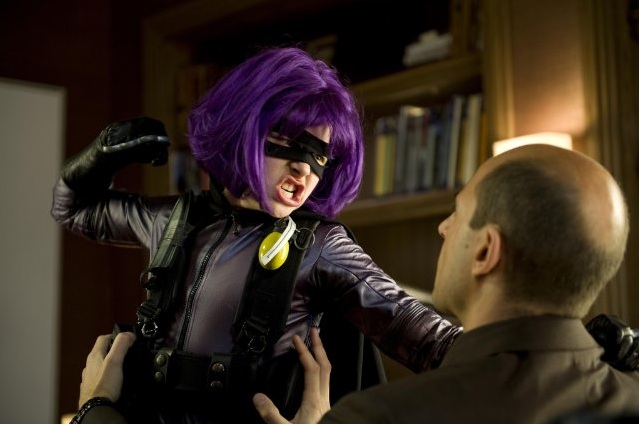
I should not be this giddy about a film so chock full of extreme violence and an 11-year old girl with a potty mouth. I should not, by rights, be so enamoured with this film about a teen geek superhero-wannabe who wears a wetsuit to save the neighbourhood. But I LOVED it. Enough to see it twice in the opening weekend. It, quite simply, kicked ass.
The script is funny, clever and very current. It's full of one-liners and hilarious teen moments that pepper the film and balance the violence and mayhem that escalate as the story goes on. The action, although violent, is never particularly realistic enough to be disturbing. It's stylised in the brand of Hong Kong super-director John Woo (it bugs me the number of reviews that refer to it as 'Tarantino-esque' – Woo is the original), and brings to mind the early movies starring Chow Yun Fat. But the graceful balletic violence is transferred to a comic book setting, which works brilliantly, and delivers most of its lethal blows through an 11 year old girl. This move has seen some major controversy in the media lately. Considering my belief system (Christian, and usually predictably conservative), I should've been joining in the ranks of the outraged, but frankly this movie got me from the premise and delivered everything it promised. It's become one of my favourite movies of the last few years at the very least.
In a short summary (no spoilers), the story is about a teen geek, Dave Lizewski (played by British Aaron Johnson) who wonders aloud why noone's tried being a superhero in real life. Armed with his newly-purchased green wetsuit, a mask, baton and MySpace page for for his alter-ego Kick-Ass, he goes out to save the neighbourhood. 11 year old, purple-wigged Hit-Girl bursts into the scene during a rescue mission gone wrong, saving his life and delivering the devastatingly funny line to his attackers, 'Okay you cunts, let's see what you've got,' and then wastes no time laying into them with a flurry of bloody knife-action. Turns out Hit-Girl (Chloe Moretz, 11-year old action prodigy) and her father Big-Daddy (Nicolas Cage in a career-reviving role) are pseudo-superheroes who are going after the bad guys to avenge the death of their wife/mother. The 'bad guys' are Frank D'Amico (the wonderful Mark Strong), the local mob boss with an artillery of goofy gang members, and increasingly also his teenage son Chris (Christopher Mintz-Plasse, McLovin' from Superbad and Role Models), who creates his own superhero alter-ego, Red Mist.
Due to the controversial nature of the film, apparently no film studio wanted to touch it unless Hit-Girl metamorphosed into a 28-year old crime-fighting machine, but creators Matthew Vaughn and Mark Millar refused to budge. As a result, it was privately funded (largely by Brad Pitt, no less) so the directors had absolute control over the film.
While the plot is quite simple, not unlike most superhero movies, there are layers in this film that take it beyond simple entertainment to potential cult status. Kick-Ass satirises the superhero genre (the heroes don't have any superpowers, Big Daddy's costume is a rip off of Batman and the hero at the centre of the action is a geek in a wetsuit), while genuflecting before its altar thematically and otherwise (good versus evil, Hit Girl's super-agile abilities and the incredibly choreographed fight scenes), all the while offering a smorgasbord of humour from light (the quips and banter of Dave and his friends) to dark (the comic book violence). Its irreverence is bound to resonate with teenagers while the cleverness of the script and brilliant action sequences will appeal to anyone who likes a good laugh and doesn't mind a bit of violence. Okay, a lot of violence, but slick and brilliantly choreographed.
Most reviews that pan the film seem to focus on the irresponsibility of placing central focus on a violent and foul-mouthed preteen, and while I agree it's not healthy by any means, in this case it does what it's meant to: be shocking and entertaining and awe-inspiring all at once. Once in her costume, Hit Girl's charisma, casual swearing and violence become something of legend, and I, for one, would have been very sorry to miss it, had she been turned into the 28 year-old studio doll most likely with a big pout and sexualised leather costume. I'll take Hit Girl dropping the f-bomb any day.
Categories
action,
comedy,
movie review
Thursday, March 25, 2010
The Girl with the Dragon Tattoo (Swedish movie)
From the first shot of middle aged, saggy jowled, pockmark-faced Mikael Blomqvist, I was disabused of my idea of Swedes as healthy looking, shiny-haired blondes twinkling in the sun. The great thing about this movie is that it's so devoid of Hollywood gloss. The Swedish film industry dares to hire actors for their abilities over their looks, and they certainly don't pull the punches when depicting the violent and often sexual episodes which are key to the story, but not dwelt on in the book. It makes for a gripping movie but not necessarily an aesthetic one. I mean, I really could have lived without watching the scene of Lisbeth forced to give head to her 'guardian', and the image of his naked 60 year old body (minus the rudie bits) is now forever burned into my retina. Yuck.
The movie was bound to be violent because the story is so very gritty, but bringing these scenes to the screen is far more in-your-face than reading them on the page. It's a well made movie for its genre (the music was only jarring in one scene for me) and generally well-casted, but I couldn't help but be disappointed by Noomi Rapace's depiction of the enigmatic Lisbeth Salander. The essence of Lisbeth, and her very strangeness, is in the fact that she doesn't react to situations like normal people. She's not emotional and seems to border on the edges of autism. Rapace's Salander is more sullen and volatile – more human, so to speak. This is a shame because ironically, the magic of Larsson's creation is in her very inhumanness. They kept the gothic look and tattoos, but lost a vital part of her core. Rapace is a fine actor and I'm certain it was more a directorial decision than her own, but personally I think they missed out on something key here.
Watching the story play out on screen, I was aware of some holes in the novel that I hadn't noticed while reading it. SPOILER ALERT: For example, when Harriet Vanger is restored, I couldn't help but wonder why the hell she didn't tell someone – anyone – about the abuse her brother put her through, instead allowing him to continue playing out his homicidal fantasies on dozens of other victims. Reading the book, you're so caught up in the action you don't really question the story. Well I didn't anyway. You might.
Book vs Movie: the verdict
The book. It's always the book, isn't it? Except for Mansfield Park, with Frances O'Connor's charming depiction of a much more feisty Fanny that Austen's wimpy creation. Books always give you more than a movie can squeeze into the usual two hours, and allow your imagination to dwell or flit from scene to scene at will, and not remain captive to another person's vision of the story. In my imagination, Mikael Blomqvist was a bit better looking (perhaps this is borne from years of Hollywood leading men, also the fact that he's sex on legs in the book version) and Lisbeth is more in control. The only one who really fit the bill is her hacker friend Plague, who is meant to be as fat and ugly as portrayed (my apologies to the actor). I loved the scene where he's trying to get her attention while sitting on the toilet.
Word has it that George Clooney is being considered for the role of the American Blomqvist. He fits the right age group and certainly fits the sex on legs bit, but I'm not sold on that idea. Do you have an opinion?
The movie was bound to be violent because the story is so very gritty, but bringing these scenes to the screen is far more in-your-face than reading them on the page. It's a well made movie for its genre (the music was only jarring in one scene for me) and generally well-casted, but I couldn't help but be disappointed by Noomi Rapace's depiction of the enigmatic Lisbeth Salander. The essence of Lisbeth, and her very strangeness, is in the fact that she doesn't react to situations like normal people. She's not emotional and seems to border on the edges of autism. Rapace's Salander is more sullen and volatile – more human, so to speak. This is a shame because ironically, the magic of Larsson's creation is in her very inhumanness. They kept the gothic look and tattoos, but lost a vital part of her core. Rapace is a fine actor and I'm certain it was more a directorial decision than her own, but personally I think they missed out on something key here.
Watching the story play out on screen, I was aware of some holes in the novel that I hadn't noticed while reading it. SPOILER ALERT: For example, when Harriet Vanger is restored, I couldn't help but wonder why the hell she didn't tell someone – anyone – about the abuse her brother put her through, instead allowing him to continue playing out his homicidal fantasies on dozens of other victims. Reading the book, you're so caught up in the action you don't really question the story. Well I didn't anyway. You might.
Book vs Movie: the verdict
The book. It's always the book, isn't it? Except for Mansfield Park, with Frances O'Connor's charming depiction of a much more feisty Fanny that Austen's wimpy creation. Books always give you more than a movie can squeeze into the usual two hours, and allow your imagination to dwell or flit from scene to scene at will, and not remain captive to another person's vision of the story. In my imagination, Mikael Blomqvist was a bit better looking (perhaps this is borne from years of Hollywood leading men, also the fact that he's sex on legs in the book version) and Lisbeth is more in control. The only one who really fit the bill is her hacker friend Plague, who is meant to be as fat and ugly as portrayed (my apologies to the actor). I loved the scene where he's trying to get her attention while sitting on the toilet.
Word has it that George Clooney is being considered for the role of the American Blomqvist. He fits the right age group and certainly fits the sex on legs bit, but I'm not sold on that idea. Do you have an opinion?
Categories
crime,
movie review,
thriller
Monday, November 30, 2009
The Brothers Bloom
The Brothers Bloom is about 2 con-men brothers (Stephen played by Mark Ruffalo, who cooks up the cons, and Bloom played by Adrien Brody, who lives his life vicariously through them) and their last mark, the isolated and eccentric heiress (a.k.a 'the epileptic photographer') Penelope, played by the truly delightful Rachel Weisz.The movie opens when the boys are young, moving from foster home to foster home, where they learn to depend only on each other against the big bad world. Stephen quickly learns how to play people (starting with 'the playground bourgeoisie') so everyone gets what they want – especially him and Bloom. He gives Bloom the life he's too shy to grab for himself, writing each con like a masterpiece of theatrical drama. But Bloom wants something real, not the written life that Stephen provides. Stephen wheedles a final con from Bloom, and this is where Bloom meets Penelope – the lonely heiress in her ivory tower, a terrible driver, interested in everything, socially awkward and definitely up for an adventure – in short, she's ripe for the picking.
Director Rian Johnson has done a wonderful job with this quirky, interesting and most of all, very funny movie. On the plus side, the scenery (the story moves across several continents), music and cast are simply superb. On the minus side, there are some holes in the plot and a too-neat ending. But on the whole, all the minuses are forgivable because it's just so charming, and there are some truly hilarious scenes that you can't help but laugh aloud at.
My usual favourite Mark Ruffalo plays the straightest of the four main characters (I forgot to mention the awesomely cool Bang Bang, the mute Japanese ingenue who likes to blow things up), but Rachel Weisz absolutely steals the show as Penelope Stamp. She is simply adorable, and makes The Brothers Bloom well worth the effort of parking on Oxford St to watch (why aren't more cinemas in Sydney other than Paddington Verona showing it??).
My top 5 con movies:
- Dirty Rotten Scoundrels
- The Brothers Bloom
- Shooting Fish
- Catch Me If You Can
- Matchstick Men
Con movies on my Christmas viewing list:
- The Sting
- The Grifters
Categories
comedy,
movie review
Thursday, November 19, 2009
Julie and Julia, movie review
Julie and Julia is a lovely drama that crosses back and forth between the lives of cooking whiz Julia Child (who started her cooking career in Paris in the 40s and 50s) and modern day blogger Julie Powell, who challenges herself to cook all 500+ recipes from Julia Child's book in one year.The real joy in the movie comes from Meryl Streep's performance as Julia Child - her life is large in every way, from her love of food to her love of her husband. She's slightly ditzy without being dumb, and has a falsetto and zest for life that simply draws you in. By contrast, Julie Powell is a modern girl in New York stuck in a menial job who wants desperately to be a writer. When she takes on the challenge to cook from Julia Child's book, she learns more about herself through her non-personal interaction with Julia Child, and begins to learn life lessons from this matriarch of French cooking. Amy Adams does a respectable job in this role, but Meryl Streep really does take the cake. She's simply divine.
Julie and Julia is a light-hearted movie that benefits from the ambience of 40s Paris and 00s New York, and the two very charming leads - not to forget their uber-supportive husbands. It's a great chick-flick and if this doesn't trigger a hankering to cook something exotic and French, nothing will.
Categories
food,
movie review
Wednesday, November 18, 2009
2012, movie review
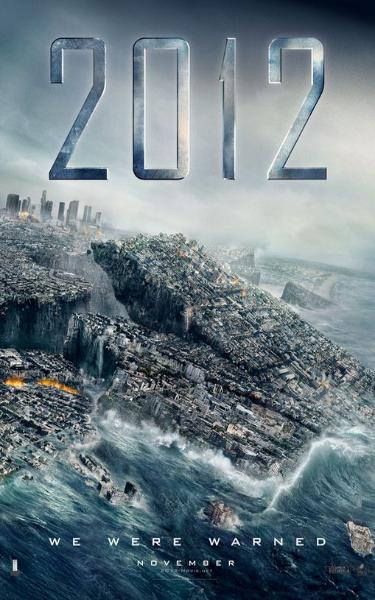
Roland Emmerich has been responsible for a number of end-of-the-world movies, but apparently 2012 is his biggest yet. The only other one of his movies I've seen is Independence Day, and a number of parallels can be drawn. There's the fact that things always happen in America - in this case it's an Indian researcher who discovers the first signs but it's the Americans who lead the way in acting on them. There's also the huge scale of effects - the catastrophe spans the entire globe as huge chunks of earth are ripped away, entire islands and landmasses become nothing but molten lava, millions of people are wiped out in minutes. And there's also the close-calls for the heroes, who are snatched from danger just in the nick of time. Literally. Unbelievably. And multiple times, which makes it all the more unbelievable.Despite the many clichès and terrible segues and huge sound effects and overbearing music, Emmerich manages to redeem this movie halfway through when the emphasis turns from disaster element to the human element. The cast is really good, and you actually care what happens to John Cusack and Amanda Peet and all. There are some really big eye rolling moments and more than a few overly sentimental ones, but there are a number of laughs to lighten the load and on the whole it's not a bad way to spend 2.5hrs. Yes - it's very long, but you could do worse.
Categories
action,
movie review
Tuesday, November 10, 2009
The Time Traveller's Wife, movie review
The movie The Time Traveler's Wife did a really good job of adapting Audrey Niffenegger's book of the same title. It would've been impossible to capture all the nuances and details from the book, so director Robert Schwentke focuses rather on the core story and allows it to breathe and tell itself. The absence of embellishments of excess emotion, imposing music and other dramatic devices is refreshing, and the movie is more affecting for being real (obviously not the time travel element).The story relies so heavily on the characters of Henry and Claire that a bad casting choice would have been disastrous, but Eric Bana and Rachel McAdams somehow adapt themselves to the characters brilliantly. I must admit I was a little skeptical at first because, as with any book, you imagine the characters a certain way and I certainly didn't imagine those two (not thin or nerdy enough! I thought of Eric Bana and too young and pretty, of Rachel McAdams). but they did a great job as Henry and Claire. They share a very different kind of love story with a number of chronological issues, but it's the human element that makes this movie so watchable.
You do have to go with an open mind because you'll have massive issues with the time travel aspect if not, and that would really do a disservice to the story. It's not about time travelling itself (explained as a genetic disorder), but about the effect it has on the afflicted Henry and his longsuffering wife Claire. The mind could really boggle with the implications, but now is not the time to let the sci-fi nerd within loose. Let go of logic and go for the ride. Oh, and take a box of tissues.
Categories
drama,
movie review
Wednesday, October 28, 2009
Whip It
Watch it because:- Juliet Lewis is awesome as the bitchy captain of the opposing team
- it's all about girl-power – tough chicks who bruise but don't cry
- lots of warm and fuzzy friendship themes
- awesome skater pseudonyms: Babe Ruthless, Smashley Simpson, Bloody Holly
- some very good acting – except Drew Barrymore, who seemed to mistake this for a stoner movie and overplays her part (funny considering she actually directed it)
- Maeby Funke appears as Bliss's best friend, Pash
Miss it because:
- there's nothing particularly new: underdogs make good, girl comes of age
- the emo love interest, which is kinda sweet but still... you know, emo
- with the co$t of movie tickets, you could easily wait for the dvd
Categories
feel-good,
movie review
Wednesday, October 14, 2009
An Education, film review
An Education is a coming of age tale about a bright young schoolgirl who is seduced by an older man. Thanks to a great script by Nick Hornby and the direction of Lone Scherfig, this story, based on the memoir of British journalist Lynn Barber, manages to be charming, light and even funny, without deprecating any of its characters.The synopsis (from Sundance Film Festival):
Attractive, bright, 16-year-old Jenny is stifled by the tedium of adolescent routine; she can’t wait for adult life to begin. One rainy day her suburban existence is upended by the arrival of a much older suitor, David. Urbane and witty, David instantly charms Jenny and introduces her to a glittering new world of classical concerts, art auctions, smoky bars, and late-night suppers with his attractive friends. He replaces Jenny’s traditional education with his own more-dangerous version. Just as the family’s long-held dream of getting their brilliant daughter into Oxford has seemed within reach, Jenny is tempted by another kind of life.
The film depicts post-war 1961 London with authenticity – alternating between the dreariness of Jenny's Twickenham home and her well-meaning parents with their limited understanding, and the glamour of city life with David and his sophisticated friends. The actors, including a roll call of British talents like Emma Thompson, Peter Saarsgard, Alfred Molina, Olivia Williams and Rosamund Pike, do a wonderful job, but Carey Mulligan, a relative unknown, shines in the star role.
The script, in my opinion, is nothing short of brilliant, and exactly what you'd hope for from Nick Hornby, author of About A Boy, High Fidelity and Fever Pitch, among other very good books. His dialogue is pitch-perfect, making the story charming rather than sordid, wry and moving instead of sad. Rather than focusing solely on the inappropriateness of Jenny and David's relationship, it explores the person and journey of the very charming and intelligent Jenny, whose verve strains against the limitations placed on her as a young female in the 1960s. Perhaps it's a rather ideal view of what Barber calls, 'a dark, shameful memory', but Hornby's interpretation creates 'sunlight and glamour' in a life lesson learnt the hard way.
Categories
drama,
movie review
Tuesday, October 6, 2009
500 Days of Summer
Shakespeare wrote, 'the course of true love never did run smooth' (A Midsummer Night's Dream, 1959) – a statement Hollywood has been trying to debunk since the inception of romance films. And this is why 500 days of Summer is so refreshing – love doesn't go smoothly and the guy doesn't get the girl. We're told that from the outset (the film's tagline is 'Boy meets girl. Boy falls in love. Girl doesn't.'), yet this is a more truthful, energetic and enjoyable romance film than most.Joseph Gordon-Levitt plays Tom, a greeting card writer who meets, falls in love with, is heartbroken by and finally gets over Summer in 500 days – hence the title. Summer (played by Zooey Deschanel) is a beautiful and complex character who is cynical about love, but does like Tom. The fact that love doesn't work out perfectly between these two already gives this movie an edge over its predecessors in the genre – it's more realistic, more grown up.
While I found the character of Summer annoying at times, both leads were quite believable. Joseph Gordon-Levitt was also a much better fit in this film than his role in G.I. Joe.
The most enjoyable parts of this film were the creative quirks, like the sudden breakout song and dance, the reality/expectation sequence, and the back-and-forth calendar countdown throughout the movie. I also loved the chalkboard wall.
500 Days of Summer is worth watching in my books – especially if you like your movies with a good dose of clever creativity.
Categories
movie review,
romance
Thursday, September 3, 2009
The Young Victoria, movie review
The Young Victoria, starring Emily Blunt and Rupert Friend, is a snapshot of the youthful years in the life of Queen Victoria. It's a lovely movie without too much melodrama, which manages to encapsulate very elegantly the difficulties faced by the young princess who then becomes queen, and makes her relatable to a new generation. The life of royals is always of public interest, and this movie allows a glimpse into this privileged yet restricted world.The actors were all very good - particularly the two leads (who are too good looking to be royals – not a buck tooth between them). Emily Blunt did a great job portraying the strength, stubbornness and occasional self-doubt of the young Victoria, and Rupert Friend was the perfect blend of gentlemanly concern and masculinity as Prince Albert, seeking how best to serve and partner his powerful young wife. The courtship and love between them is really the central focus of this movie, and the peripheral aspects of political powerplay are only touched on in direct relation to its effect on Victoria.
The sceenplay, written by Julian Fellowes (who wrote Gosford Park and has just been signed up to write Jonathan Strange and Mr Norrell) is quiet yet effective, which seems to be his trademark. The positive halo-view of England and English politics is more subtle than the usual in-your-face patriotism of US movies, but despite the unspoken monarchic-apologetic undertone of this movie, one can't help but feel that within the stifling palace walls, the royals can never really know what it is to be a normal person, and could it ever really benefit a country to have a leader so far removed from the common man?
Politics aside, The Young Victoria is an enjoyable movie and recommended viewing for those who enjoy a good drama that doesn't require things to be blown up to be fun.
Categories
movie review,
romance
Subscribe to:
Posts (Atom)